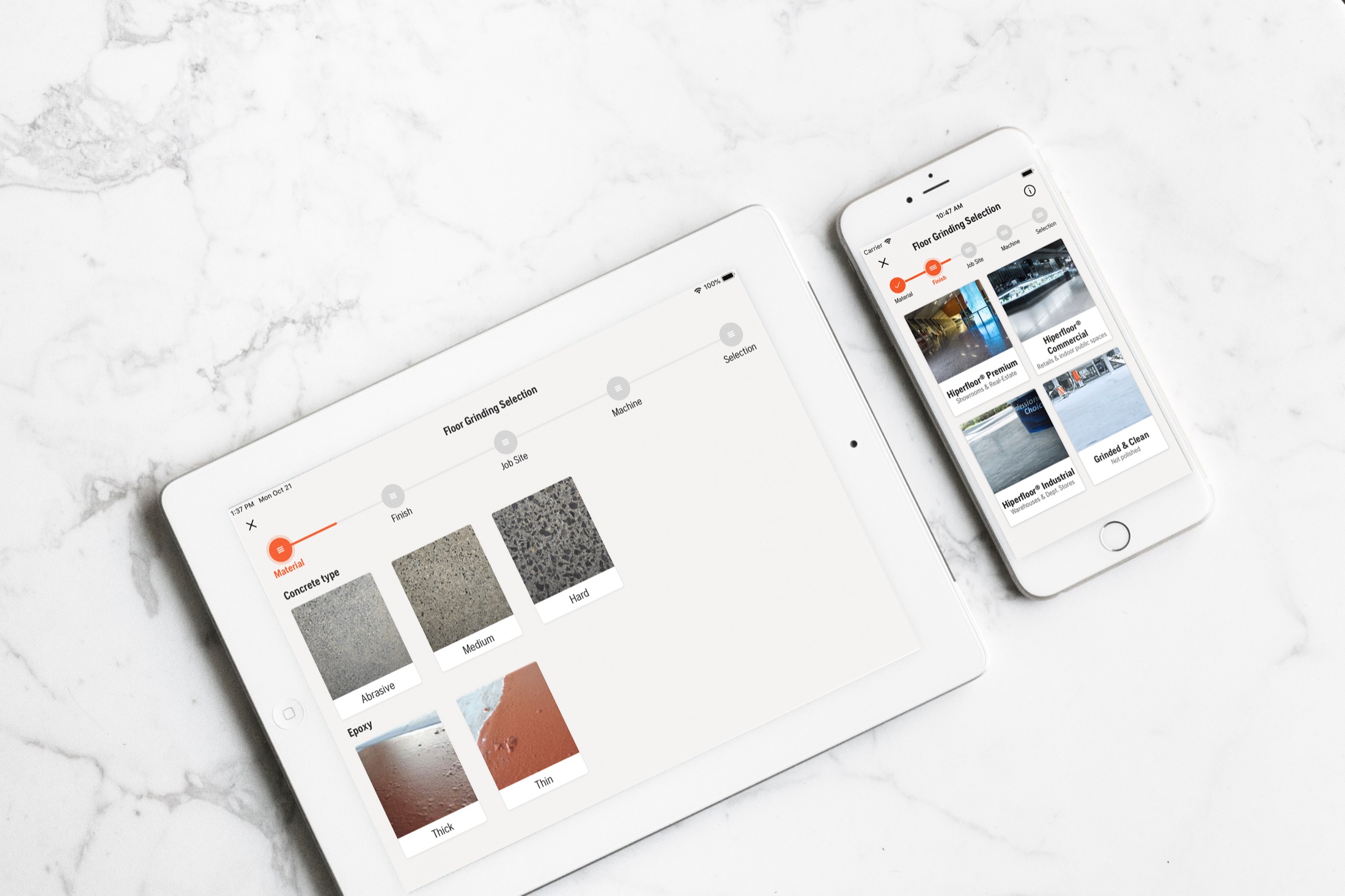
Expert tool recommendations, no expertise required
The brief
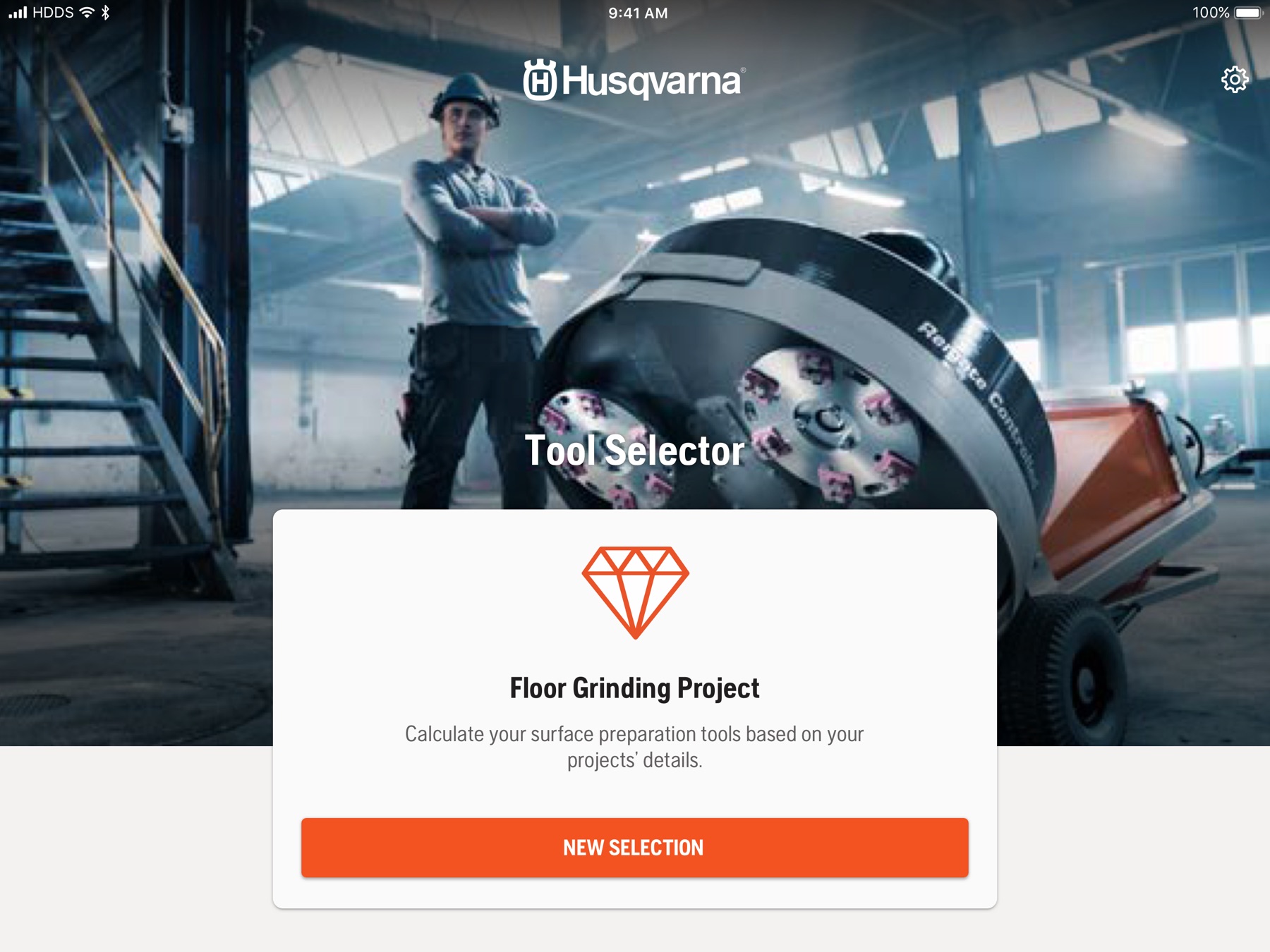
A recommendation engine that bottles diamond-tool expertise for people without it — enter the job, get the right tool, accessories and workflow. Impact-mapped, user-validated, launched at World of Concrete 2020.
- Client
- Husqvarna Construction
- Timeline
- 2018 — 2020
Launched at World of Concrete 2020 - Role
- UI Designer
Two-person design team - Capabilities
- Impact mapping
User validation
UI design
Design for expertise transfer
The problem
Expertise, bottled
Husqvarna wasn't selling as many diamond tools as it wanted — because finding the right tool for a construction job is genuinely hard. Picking the right blade or drill for a material, dimension and machine took years of experience that most sales staff and contractors don't have.
“I need to look professional in front of my customers.”
My role
UI design in a two-person team, inside an agile squad
- Impact-mapping workshops with the Diamond Tools category
- Synthesis of prior research + ~10 continuous user interviews
- UI design across phone and tablet, shipping in quarterly timeboxes
- User validation of the contractor MVP with sales reps and contractor managers
Decisions & trade-offs
Three calls that shaped the selector
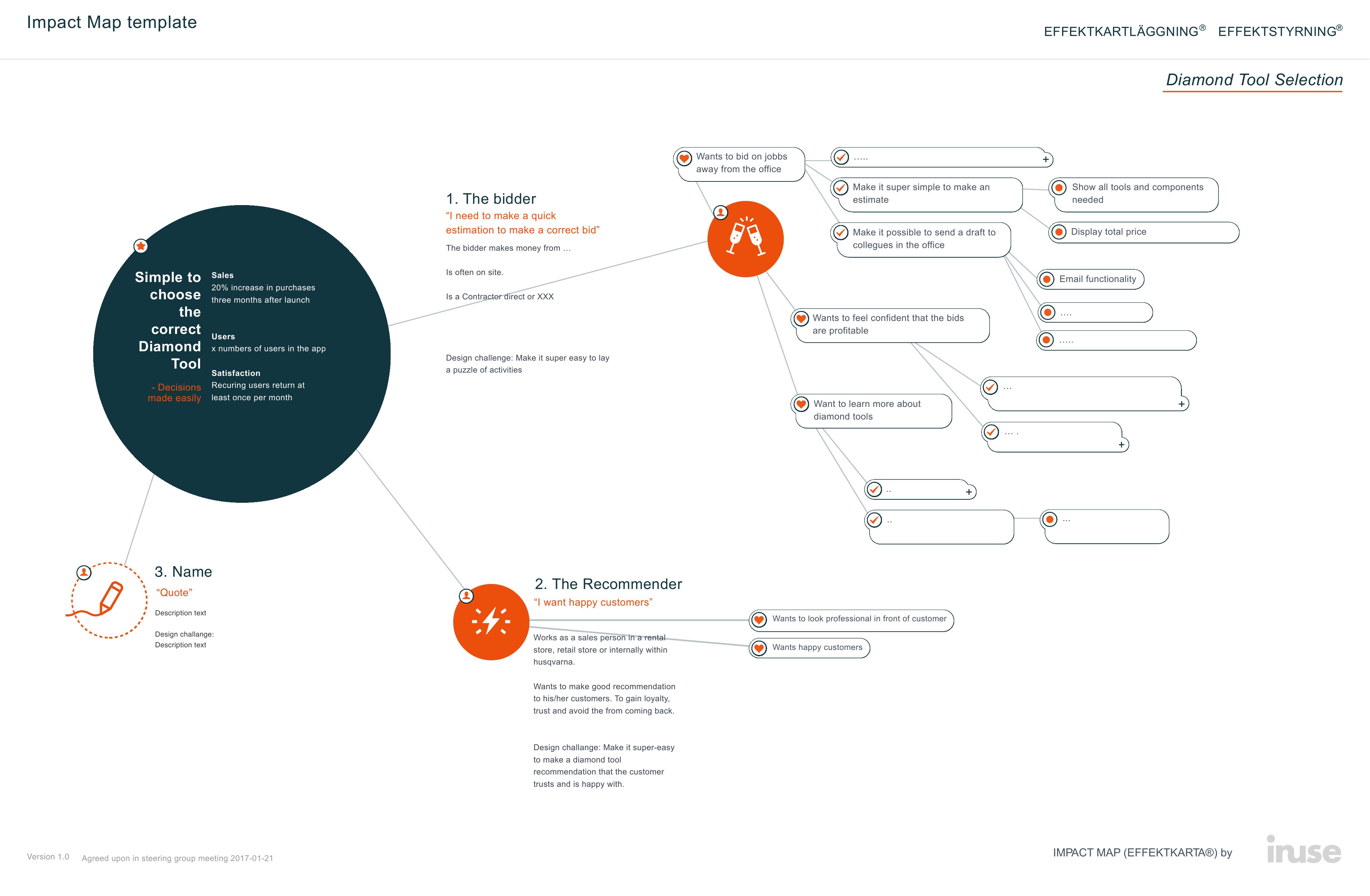
Impact mapping before feature lists
The project's focus shifted from "which features" to "which user patterns" — seven behavior-based groups, prioritized, each with a stated design challenge. Features had to trace to an impact.
Trade-off — harder conversations, sharper scope
Let users rewrite the vocabulary
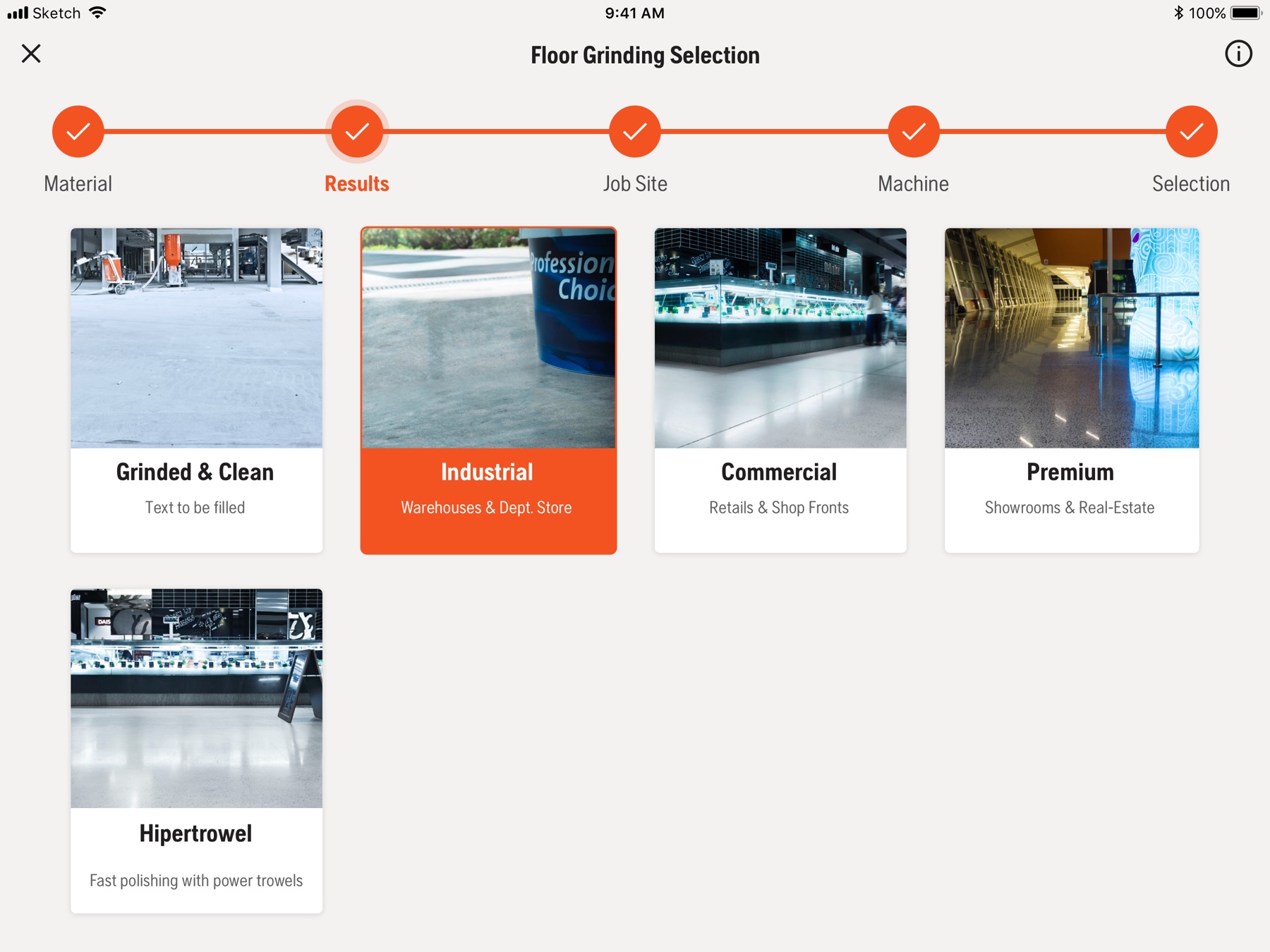
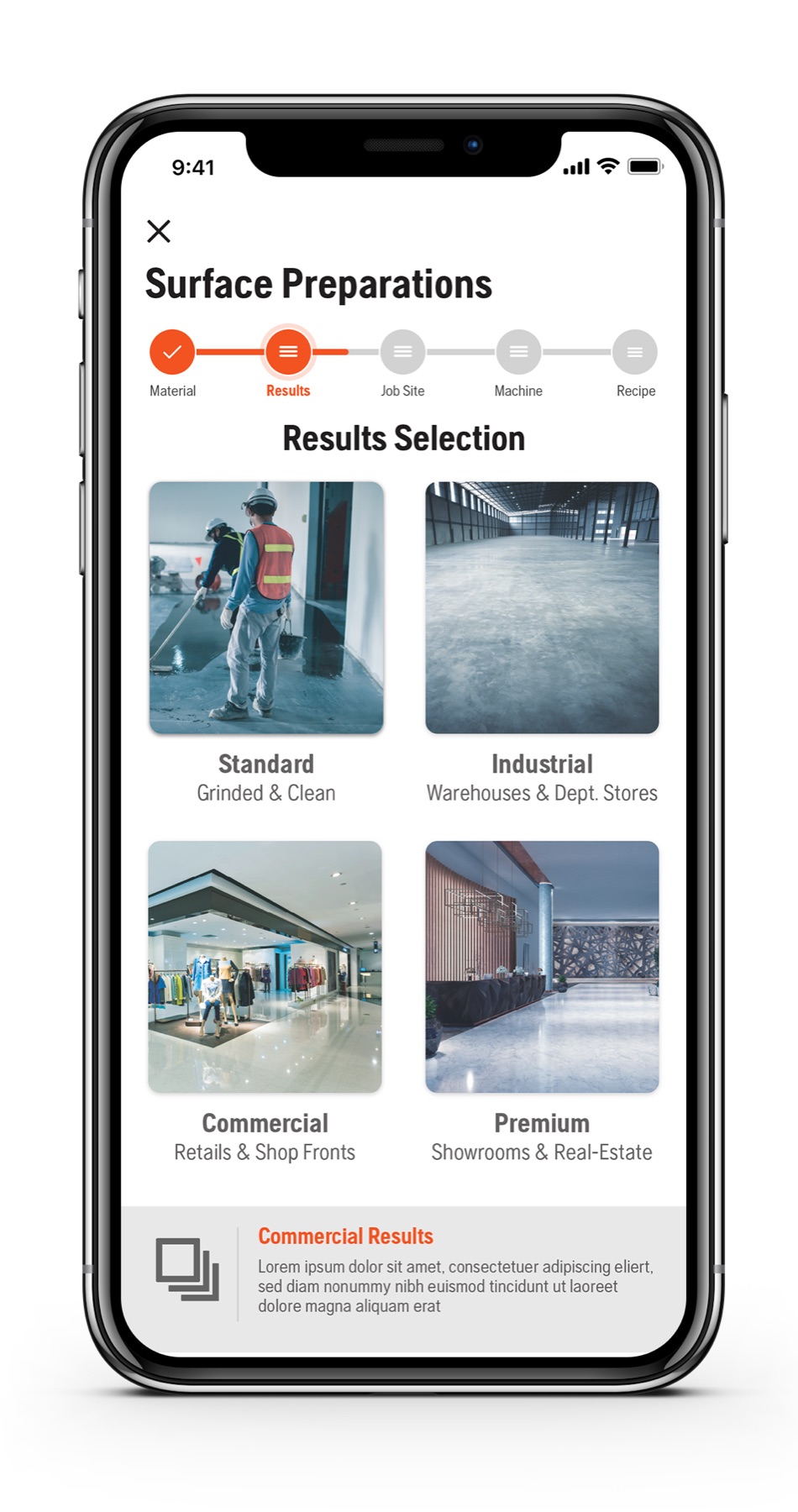
Validation renamed the product's language: "Recipe" became "Selection," "Lifetime" became "Tool life," "Result" became "Finish." The interface speaks job-site, not catalog.
Trade-off — internal glossary friction, external clarity
Cut the expert-only features from MVP
Inputs that only served internal specialists — test preparation, edge and angle grinding — were cut, keeping the "one man in a van" starter case dead simple. Price and price-per-m² became the star outputs, because that's what users decide on.
Trade-off — specialist grumbles, contractor adoption
Outcome
From Belgian sales hack to world stage
What began as an internal sales prototype grew through four structured feedback loops — from a small expert group to the US surface-preparation team, global specialists, a beta-tester pool, and finally the entire sales force — picking up user-requested features like cost-per-m² evaluation and CRM-ready output. A first prototype showed at Bauma 2019; the Surface Preparation selector launched at World of Concrete in January 2020, with Sawing & Drilling following. The tool selector is live on Husqvarna Construction's site today.
What I learned
Expertise transfer is a design problem, not a content problem
The knowledge existed; it just lived in a few heads. Designing the selector taught me that the interface itself can be the training — and that users' words beat product words every time. I've never named a feature without testing the name since.