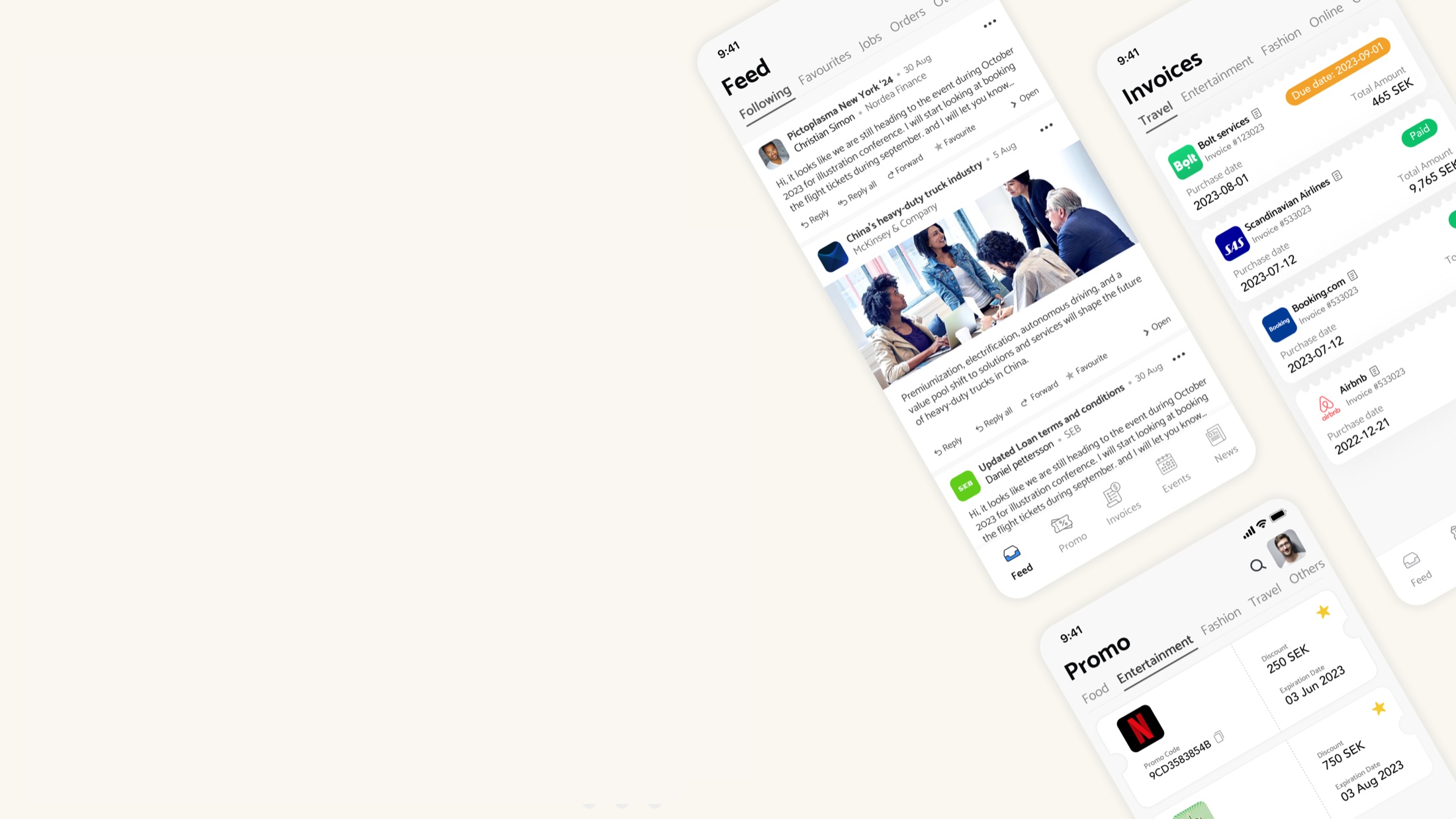
Your inbox, reshaped into smart cards by AI
The brief
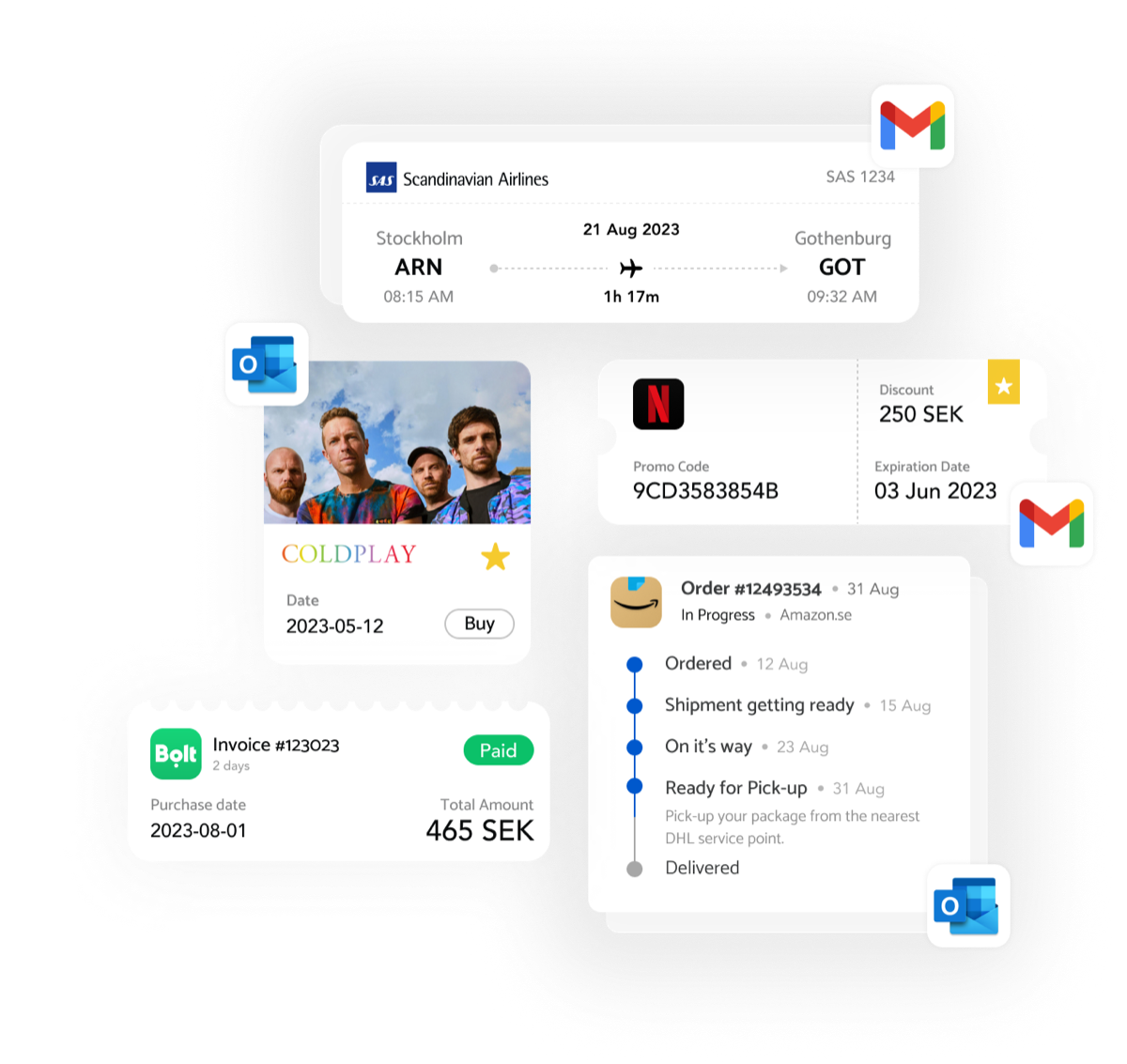
My own AI product: an app that reshapes your inbox into smart cards — flights become itineraries, invoices become payments to track. Strategy, research, design, build and App Store launch: the complete loop, founder-led at Design Castle.
- Studio
- Design Castle AB — own product
- Launched
- App Store, October 2024
- Role
- Founder — strategy, design,
delivery & go-to-market - Type
- AI consumer product
iOS — Swedish market
The problem
Your inbox is full of things — not messages
The way we use email changed completely — boarding passes, concert tickets, invoices, order tracking, promotions — but email apps still show threads. Many of us run two addresses just to keep the chaos away from the life admin. Email exists in the most important moments of our lives; the inbox should understand that.
“Inpost supports busy professionals to stay in control of their personal life commitments, save money, and get hassle-free communication for valuable content.”
My role
Every hat, honestly worn
- Product strategy & positioning — brief, business model, roadmap
- Validation research — 12 qualitative interviews, 28-user prototype survey
- Product design — the card system, flows, App Store presence
- Delivery & go-to-market — development drive, launch, early access
Decisions & trade-offs
Three calls that shaped the product
Cards, not threads
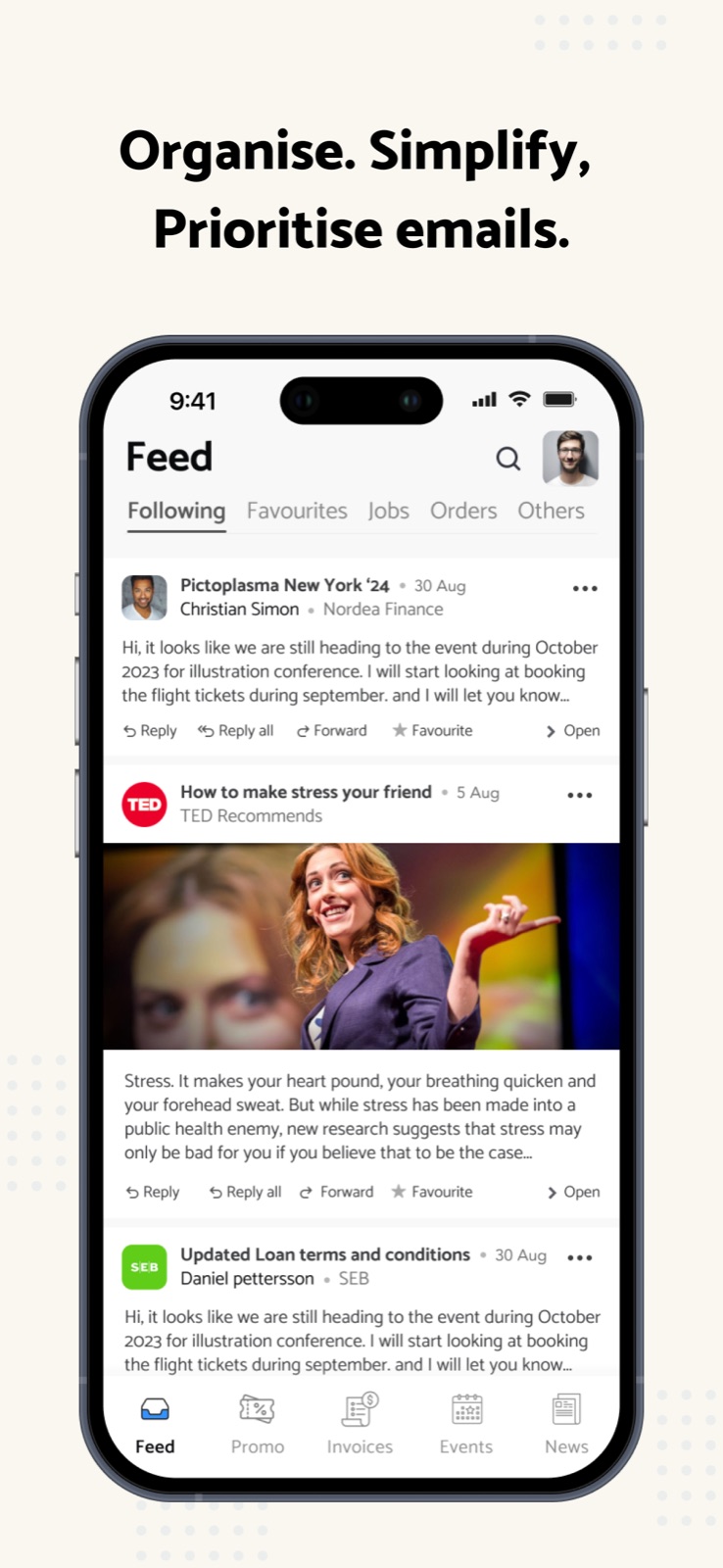
The core bet: reshape email into structured objects — four categories (promotions, invoices & receipts, newsletters, calendar) with AI doing the sorting. The inbox becomes things you act on, not mail you triage.
Trade-off — harder AI problem, clearer product
Don't be "another mail client"
Strategy explicitly avoided positioning against Gmail, Superhuman, Spark and Hey as an intelligent mail client — Inpost is a life-admin platform that happens to read email.
Trade-off — smaller category, defensible ground
Invitation-only early access
Launch went through invitations and referrals rather than open floodgates — controlled quality of the AI experience over vanity installs.
Trade-off — slower growth, honest signal
Outcome
From brief to App Store — every step mine
Brief written 2023; validated through interviews and survey; designed, built and shipped v1.0 to the App Store in October 2024 with invitation-only early access, backed by pre-seed groundwork. It's the complete loop a designer rarely gets to own.
What I learned
Shipping your own product changes how you design for everyone else
When the roadmap, the budget and the App Store rejection emails are all yours, every design decision carries its real cost. Building with AI as the material — not a feature bolted on — taught me where models genuinely help people and where they just demo well; that judgment now informs every AI conversation I'm in.