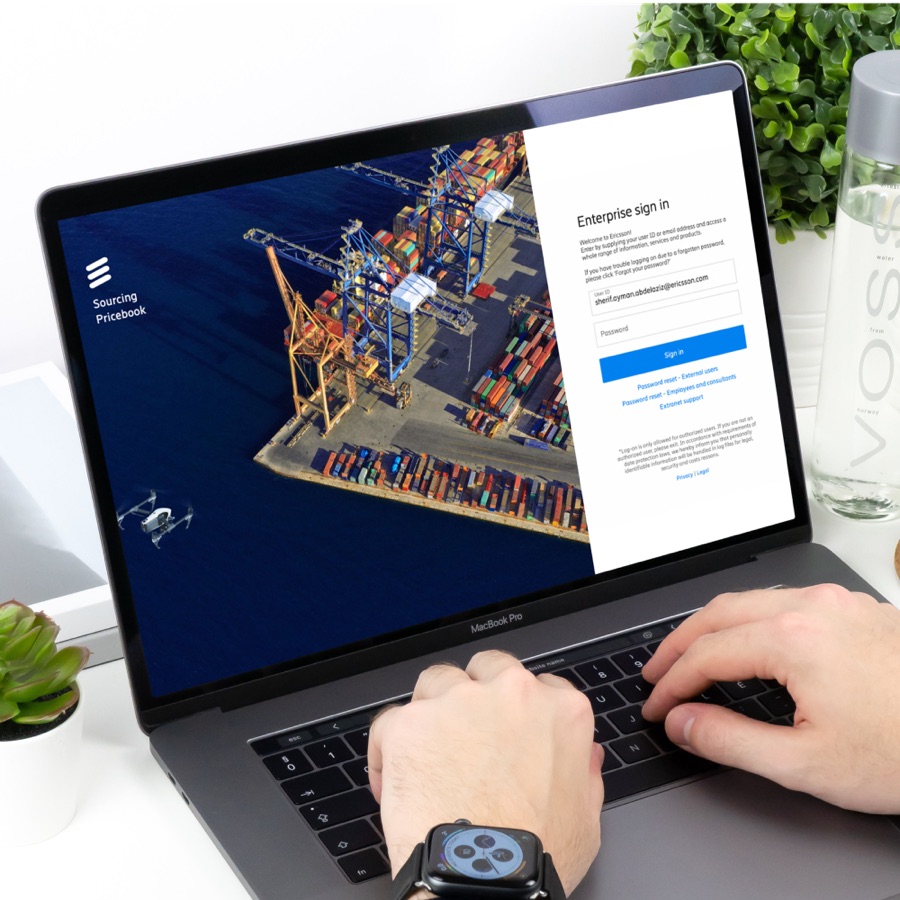
360° sourcing solution saving 2,500+ manual hours a year
The brief
Digitalize how Ericsson's sourcing organization works: better visibility on prices, the right supplier faster, and the manual work stripped out of every negotiation. I led UX end to end — the tool now saves 2,500+ hours of manual work a year.
- Client
- Ericsson AB — Sourcing
- Role
- UX Design Lead
Digital transformation initiative - Capabilities
- User research
Co-creation workshops
UX & UI design
Ways-of-working design - Impact
- 2,500+ hours saved annually
Transferred to the unit as its own tool
The problem
Every negotiation started with a spreadsheet hunt
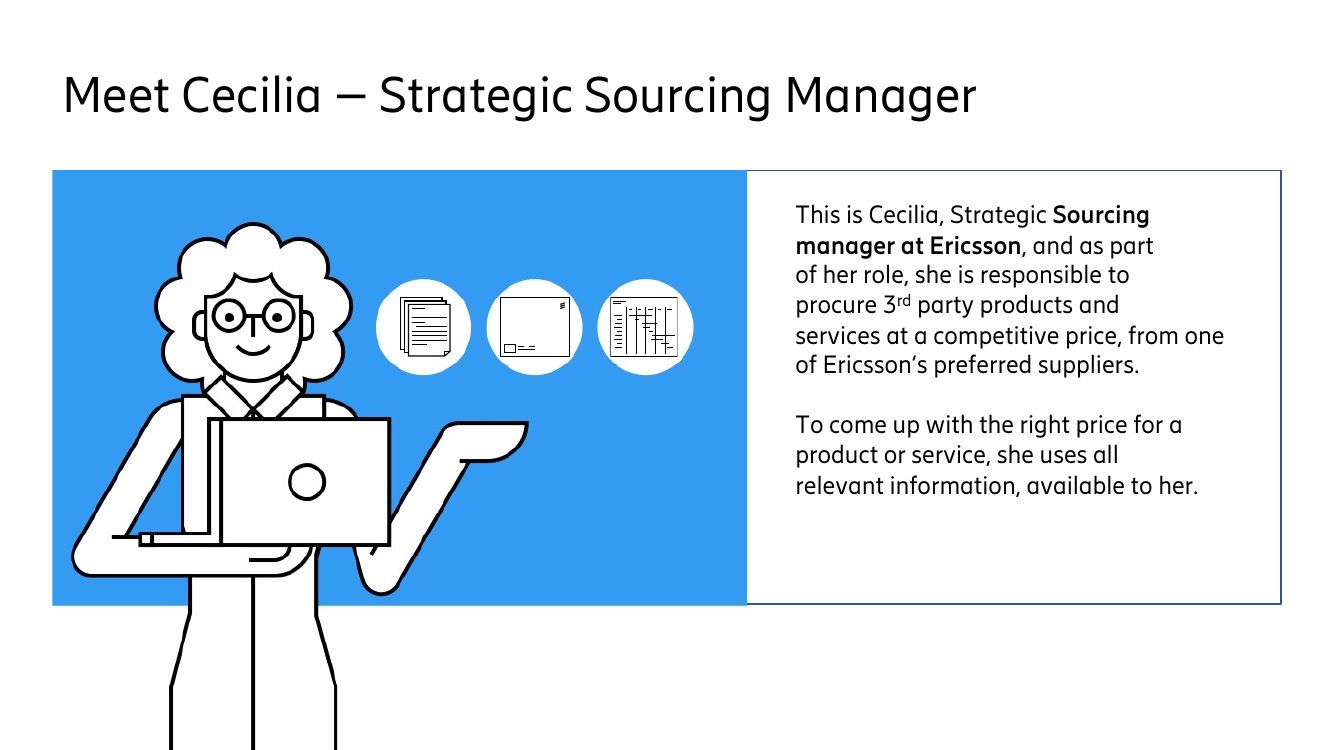
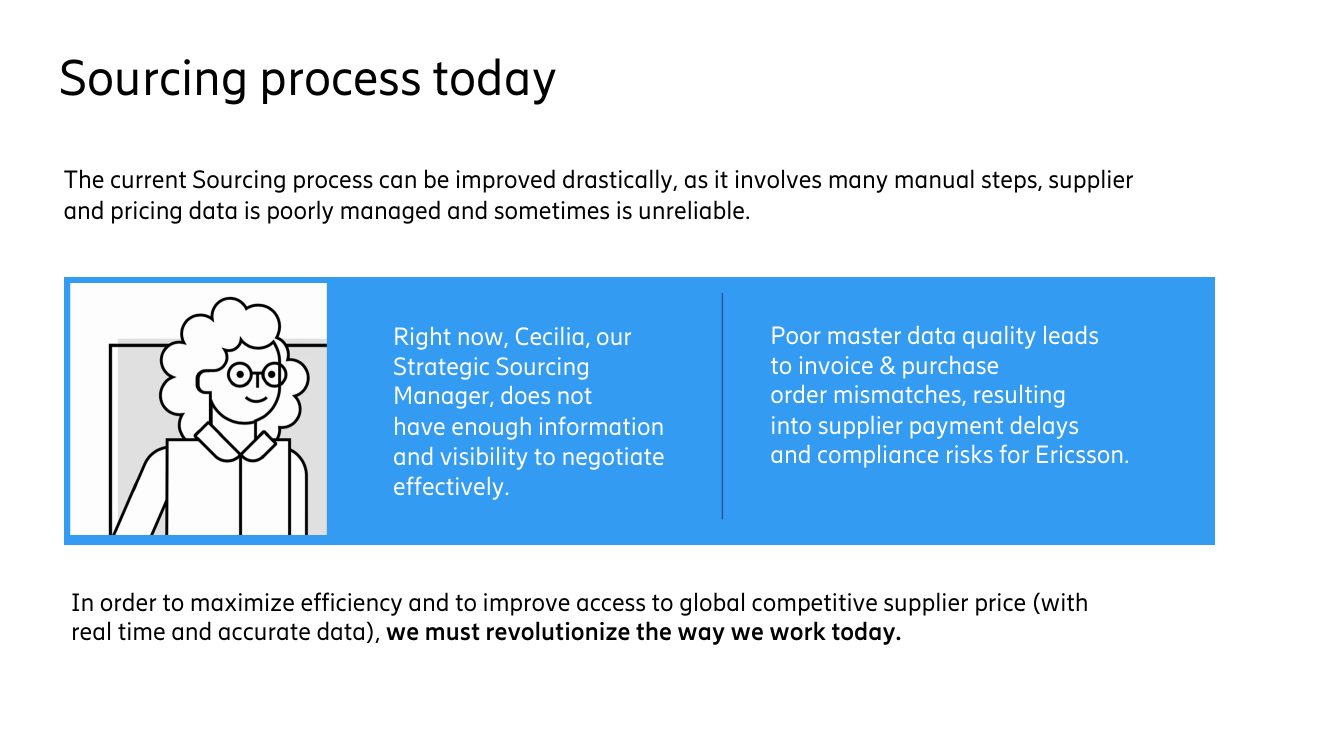
A strategic sourcing manager procuring third-party products at global scale pulls together every scrap of pricing information she can find — and too much of it is manual, scattered and unreliable. Poor master data quality caused invoice and purchase-order mismatches, supplier payment delays and compliance risk. The person negotiating on Ericsson's behalf was the person with the least visibility in the room.
“We will support the digital transformation of the Sourcing organization by providing better visibility on prices, saving more money by finding the right supplier, and reducing manual work on their negotiations.”
My role
Design lead for the transformation, not just the tool
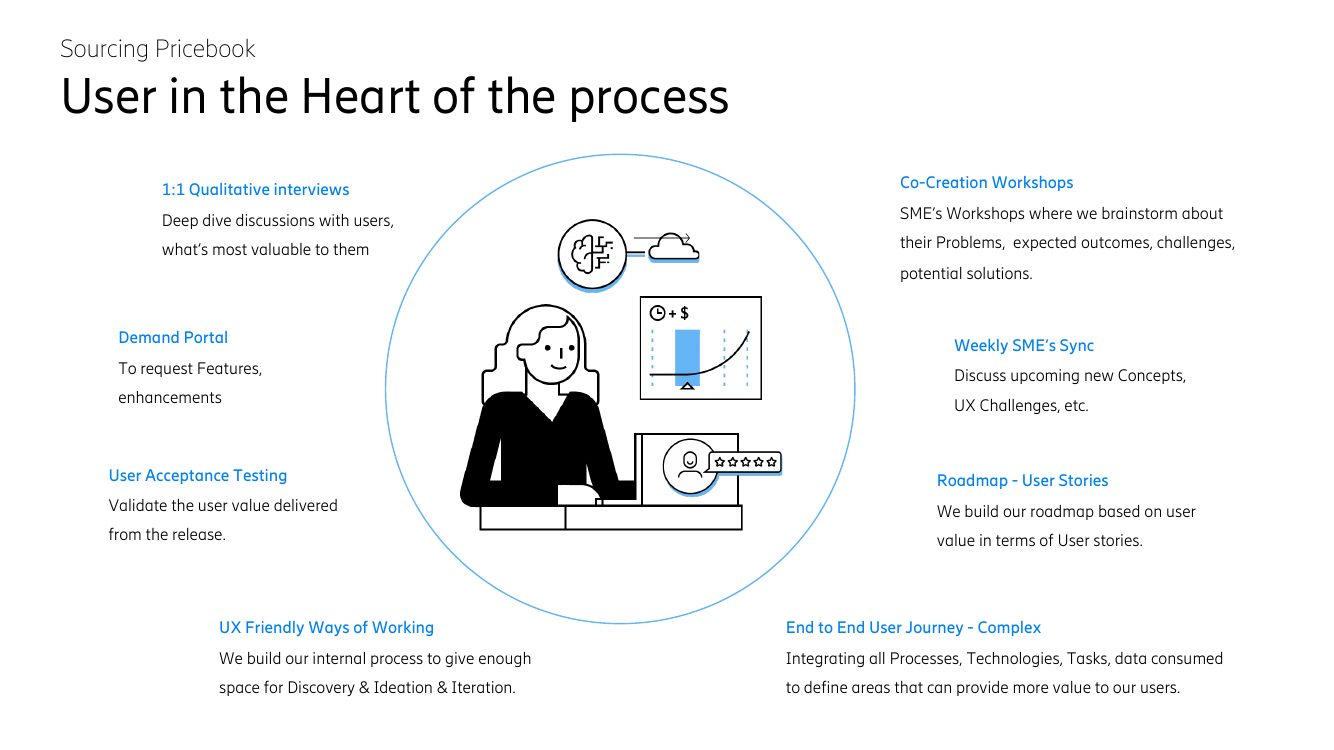
I led UX across the initiative — and treated the ways of working as a design object, not just the screens. The process I built around the product kept users in the heart of every release.
- User research — 1:1 qualitative interviews with sourcing managers and SMEs
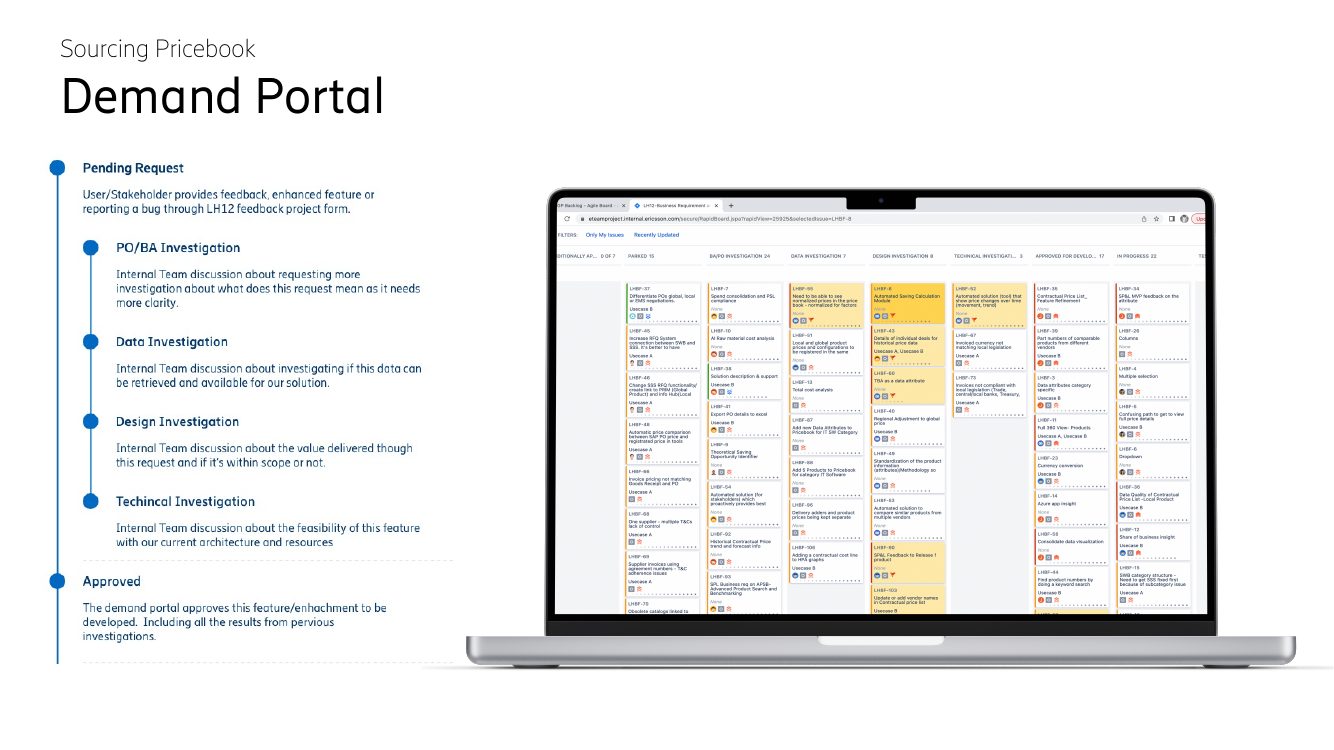
- Co-creation system — workshops, demand portal, weekly SME syncs
- UX & UI design across the product's use cases
- Roadmap practice — user stories tied to demands, so the team ships user value
Decisions & trade-offs
Three calls that shaped the Pricebook
Design the process before the screens
Inside a delivery-driven organization, I carved explicit space for discovery, ideation and iteration — a UX-friendly way of working the team had to protect release after release.
Trade-off — slower first release, faster right answers
User stories, not functions
The roadmap states what users gain and why, linked to the epic and the originating demand — keeping a cross-functional team focused on user value instead of feature count.
Trade-off — more framing work up front, less waste downstream
Seed workshops with constraints
Co-creation sessions open with what's restricted and why it hasn't been solved — "don't run into a wall" — then let SME creativity work inside real boundaries.
Trade-off — less blue-sky, more shippable ideas
Outcome
Sourcing users became the hero of every negotiation
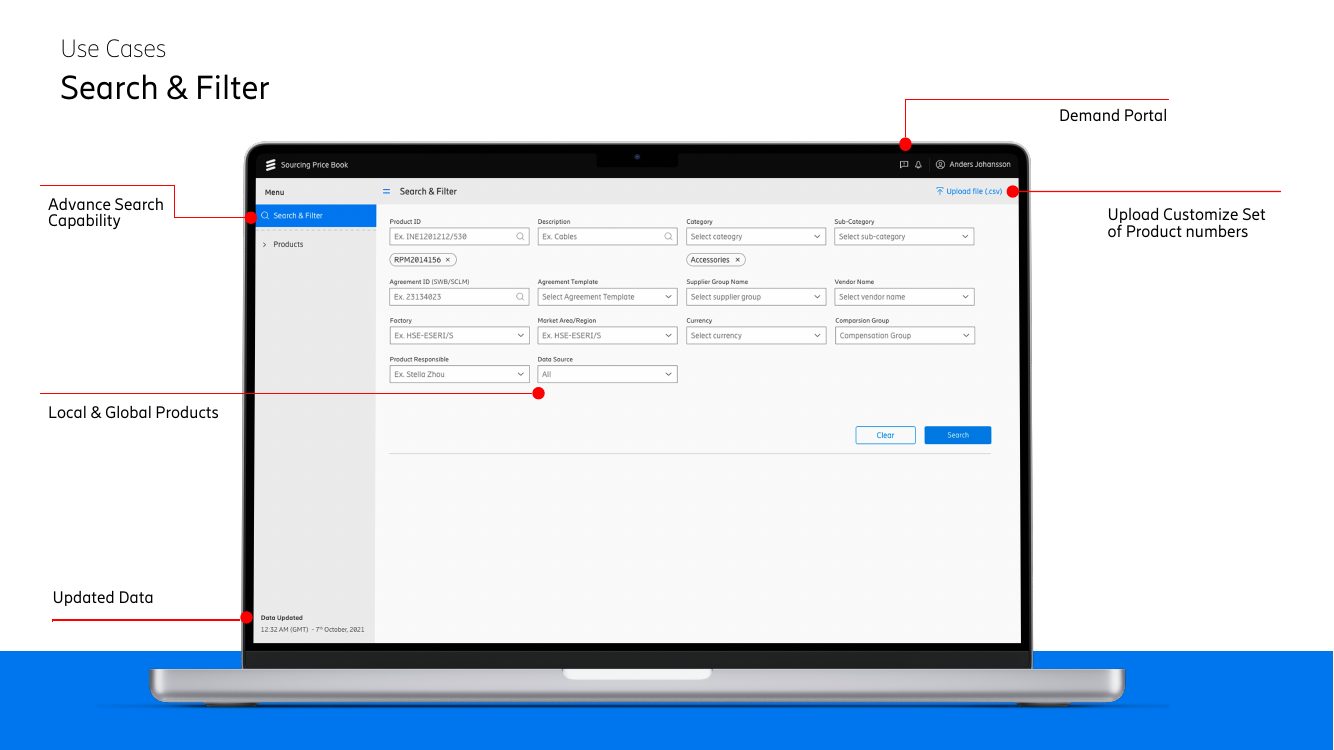
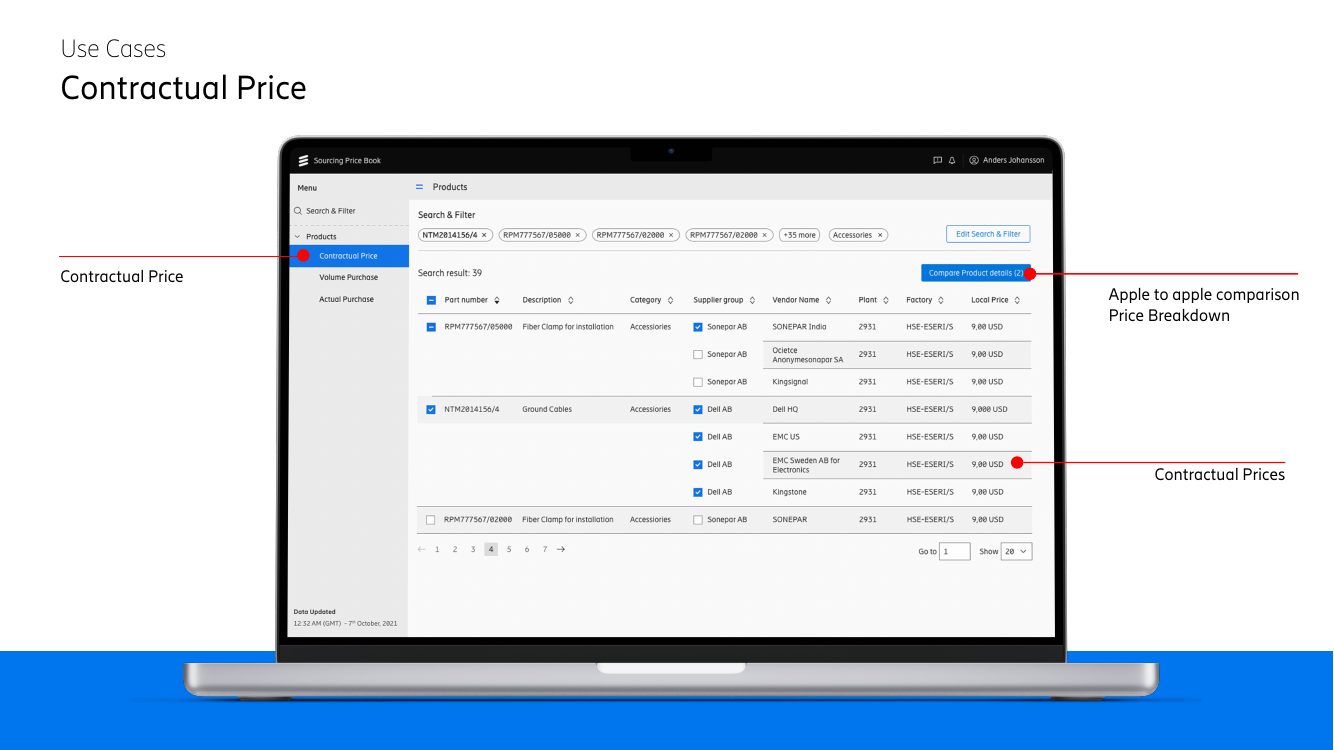
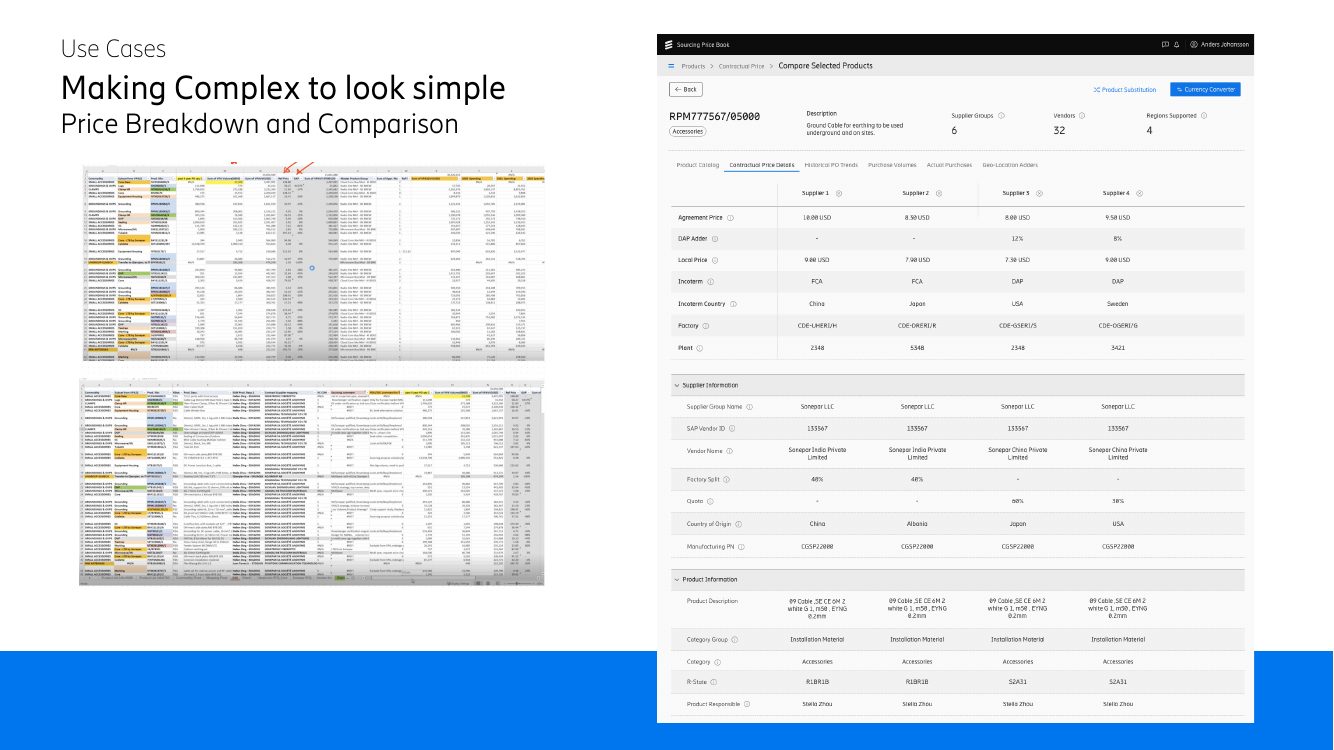
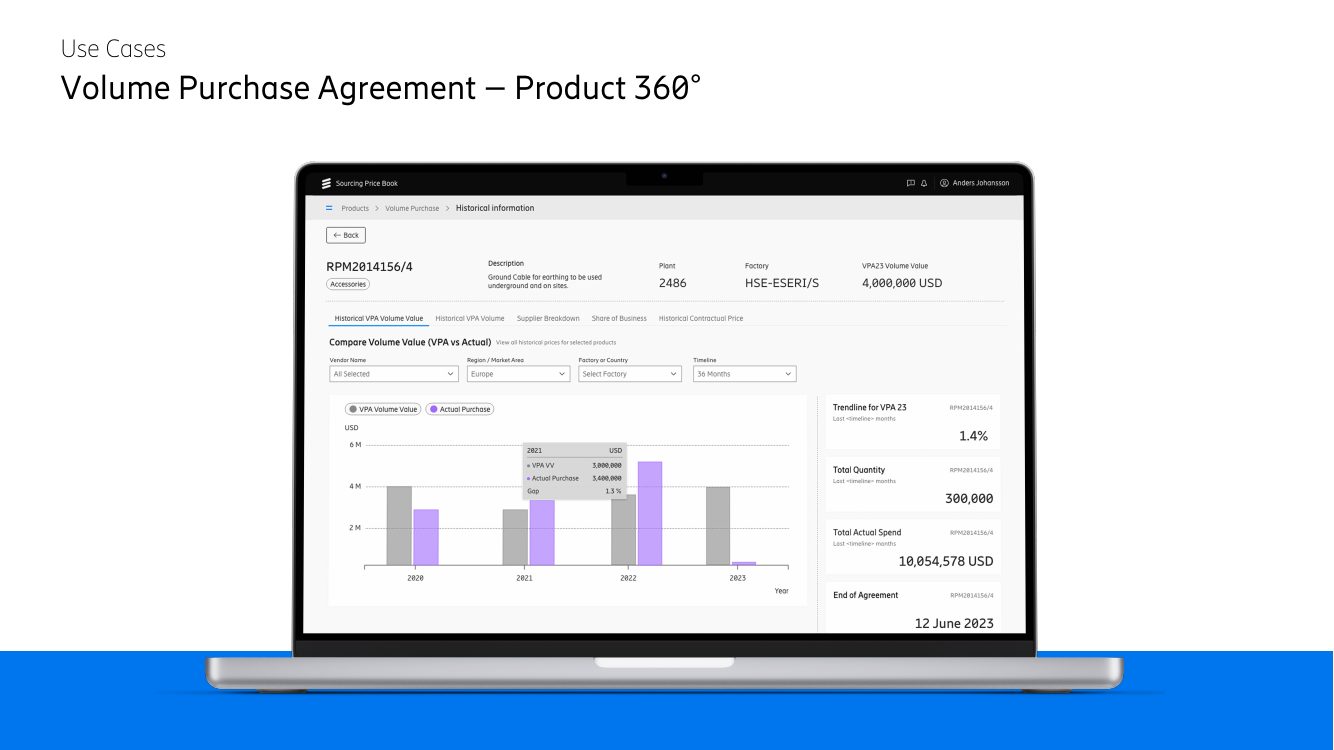
The Pricebook turned scattered, unreliable pricing into a single trustworthy source — advanced search across local and global products, apples-to-apples contractual price comparison, price breakdowns, historical information and a product-360 view of volume purchase agreements. It now saves the sourcing department more than 2,500 hours of manual work every year, and was successfully transferred to the unit to run as its own.
“Sourcing Pricebook started to be very good and valuable now. It has a lot of details related to products that we need and want to utilize.”
What I learned
Transformation is a ways-of-working problem wearing a software costume
The Pricebook succeeded less because of any single screen and more because the process around it made user value non-negotiable — demands traceable, stories tied to people, SMEs co-creating inside honest constraints. That lesson — design the operating rhythm, then the interface — is one I've carried into every initiative since.