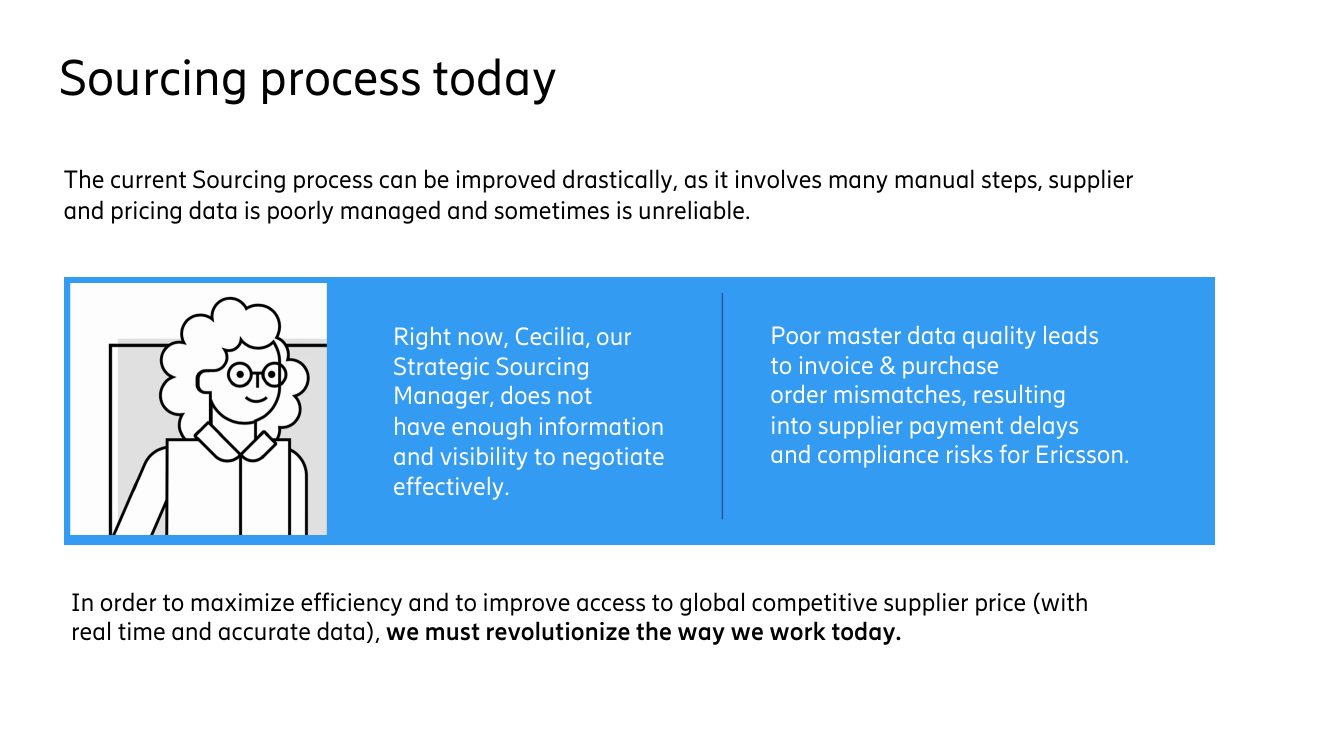
Delivery organizations are optimized to ship what's already decided. Left alone, they will compress discovery to zero — not from malice, but from momentum. On Ericsson's Sourcing Pricebook, the most important thing I designed wasn't a screen. It was the operating rhythm that made user value non-negotiable, release after release.
The system, concretely
- 1:1 qualitative interviews running continuously — what's genuinely valuable, straight from sourcing managers.
- Co-creation workshops where subject-matter experts brainstorm problems and solutions inside real constraints.
- A demand portal — every feature request becomes a traceable demand instead of a hallway promise.
- Weekly SME syncs for upcoming concepts and UX challenges, so alignment is a habit, not a meeting series.
- User-acceptance testing on every release — the definition of done includes "users confirmed the value."
Why rhythm beats heroics
A brilliant research phase that happens once decays immediately; a modest research habit that happens weekly compounds. The Pricebook's outcomes — 2,500+ hours of manual work saved annually, and a tool the unit adopted as its own — came from years of small, systematic user contact, not from one great workshop.
The trade I'll always take
Designing the rhythm costs speed at the start — the first release moves slower while the habits set. What you buy is the right answers arriving faster forever after, because the people the product serves are inside the loop, permanently. Design the operating rhythm, then the interface.