Husqvarna's Diamond Tool Selector had a hard job: bottle years of diamond-tool expertise for people who don't have it — enter the job, get the right blade, accessories and workflow. The recommendation engine worked. The vocabulary almost got in its way.
Validation renamed the interface
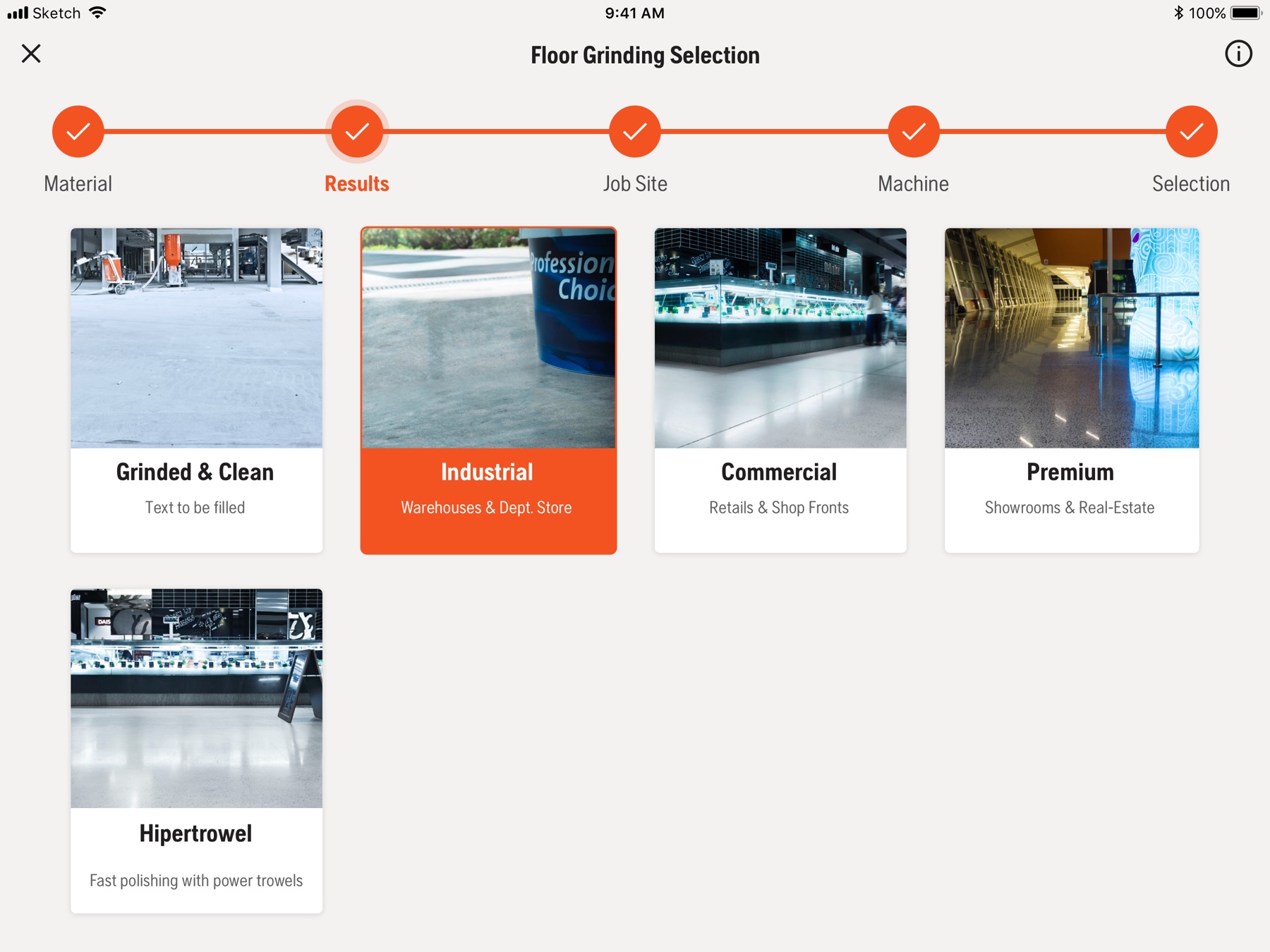
Terms we brought to testing came back rewritten by the users: "Recipe" became "Selection." "Lifetime" became "Tool life." "Result" became "Finish." Every original term was internally logical — and externally opaque. The people at the counter and on the job site already had a working vocabulary; the interface could either speak it or lecture them. An interface that lectures doesn't transfer expertise. It gatekeeps it.
Whose words to borrow
You can't test names until you know whose names count. Impact mapping gave the project seven behavior-based user groups and a lead one — "The New Recommender," the salesperson whose driving need was, in their own words, "I need to look professional in front of my customers." The same listening decided the outputs: price and price-per-m² became the stars of the results screen, because that's the language the buying decision is actually made in. Continuous user interviews and validation rounds with sales reps and contractor managers kept the vocabulary honest as the tool grew.
The trade, admitted
Adopting users' words costs internal friction — the glossary in the product stops matching the glossary in the category team's heads, and someone has to defend that gap in every review. What it buys is an interface that transfers expertise instead of assuming it. The selector went from an internal sales prototype to Bauma 2019 to a World of Concrete 2020 launch, and it's live on Husqvarna Construction's site today. I've never named a feature without testing the name since.