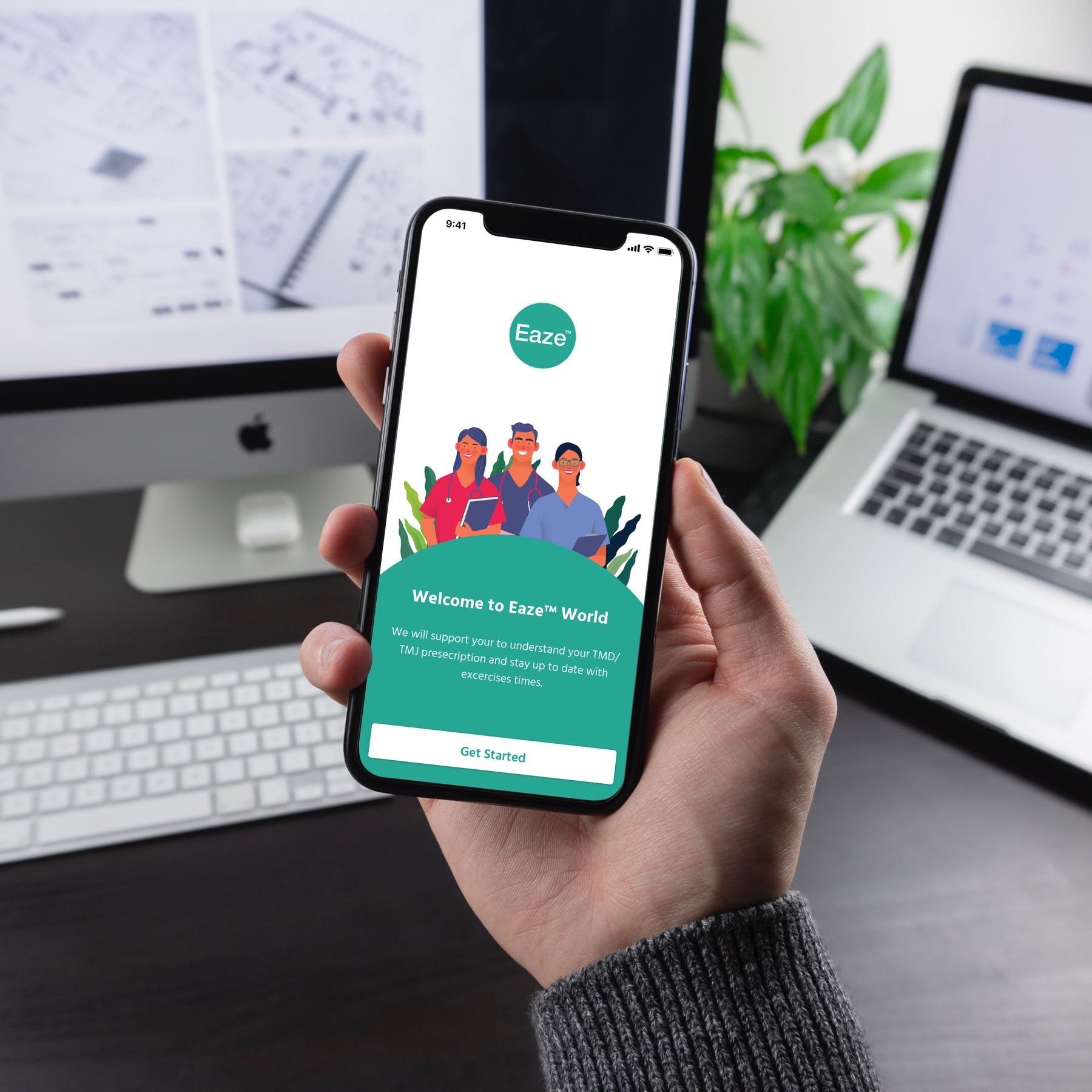
Clinical jaw-motion training — patient app, doctor portal, 3D coach
The brief
A digital platform for TMD and jaw exercises — a patient app with a 3D-animated exercise coach, and a portal where dentists and specialists prescribe, tune and follow up. Designed and delivered end to end by my studio, from a 2020 clinical brief to a paying product in 2023.
- Studio
- Design Castle AB — design & delivery
- Timeline
- March 2020 — v1.5 May 2023
iOS sign-off March 2021 - Clinical context
- TMD / orofacial pain
Presented at Karolinska Institute - Capabilities
- Clinical research collaboration
Product strategy
UX & UI design
3D motion system direction
The problem
Prescriptions on paper, patients in pain
TMD affects roughly 10% of the adult population, and the standard treatment is jaw exercises — prescribed on paper sheets. The literature is blunt about how that goes: between one and two thirds of patients don't follow their prescribed exercises, and even among those who do, only about 70% complete them (Sirur 2009; Medina-Mirapeix 2009; Jack 2010; Beinart 2013). Patients struggle to remember the exact movements, lose motivation, and arrive at follow-ups with nothing to discuss but memory.

“We believe we can increase patients' engagement with jaw exercises by providing a digitalised prescription — supporting them to understand it, increasing commitment to the daily program, and generating qualitative information for follow-up appointments.”
My role
Studio lead across research, product and delivery
Design Castle carried the product from clinical brief to shipped platform — in close collaboration with TMD specialists, and with patients in the design process throughout.
- Discovery with clinicians — expert interviews, clinical literature, adherence research
- Product strategy — two-sided ecosystem, business model, roadmap to v1.5
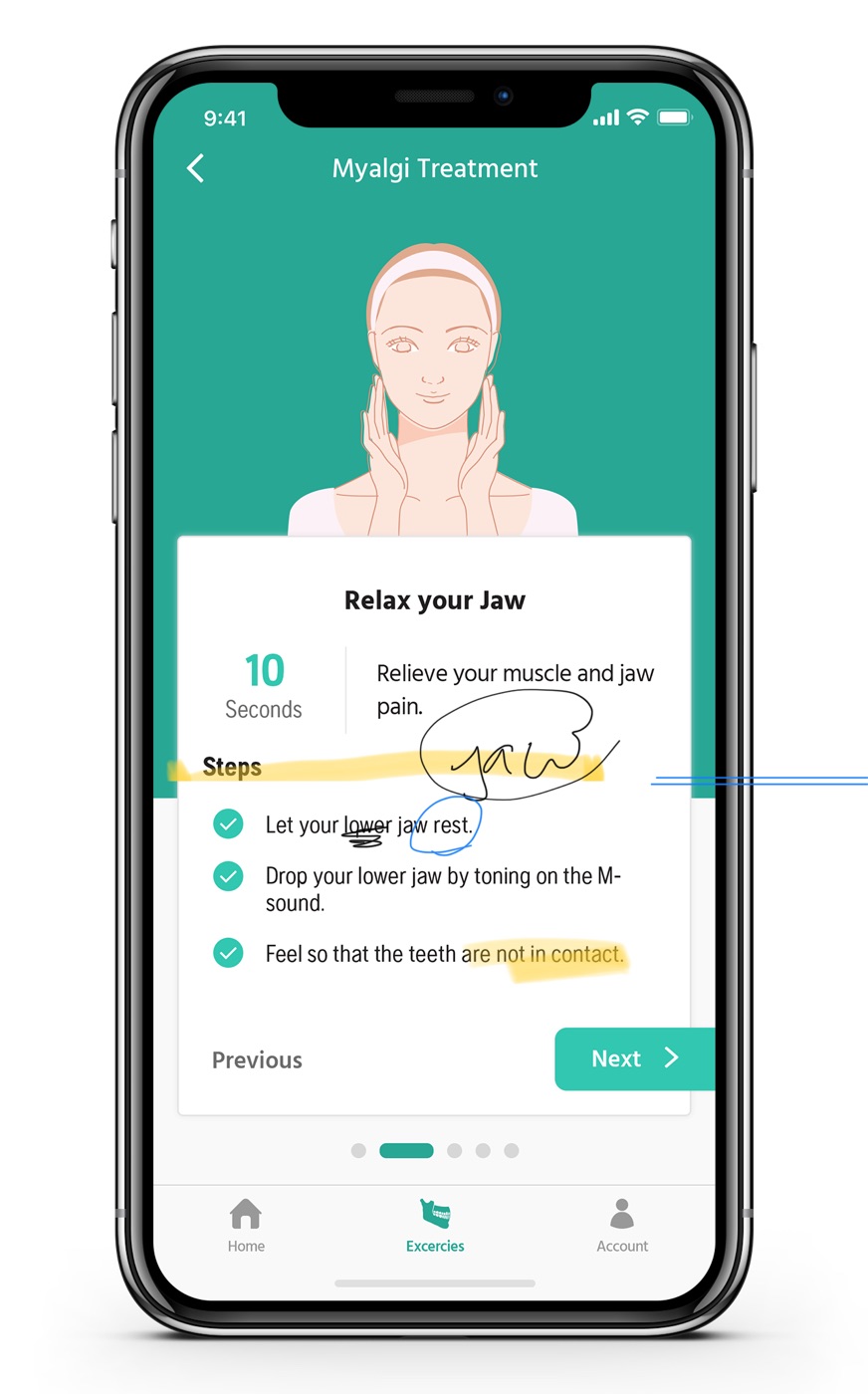
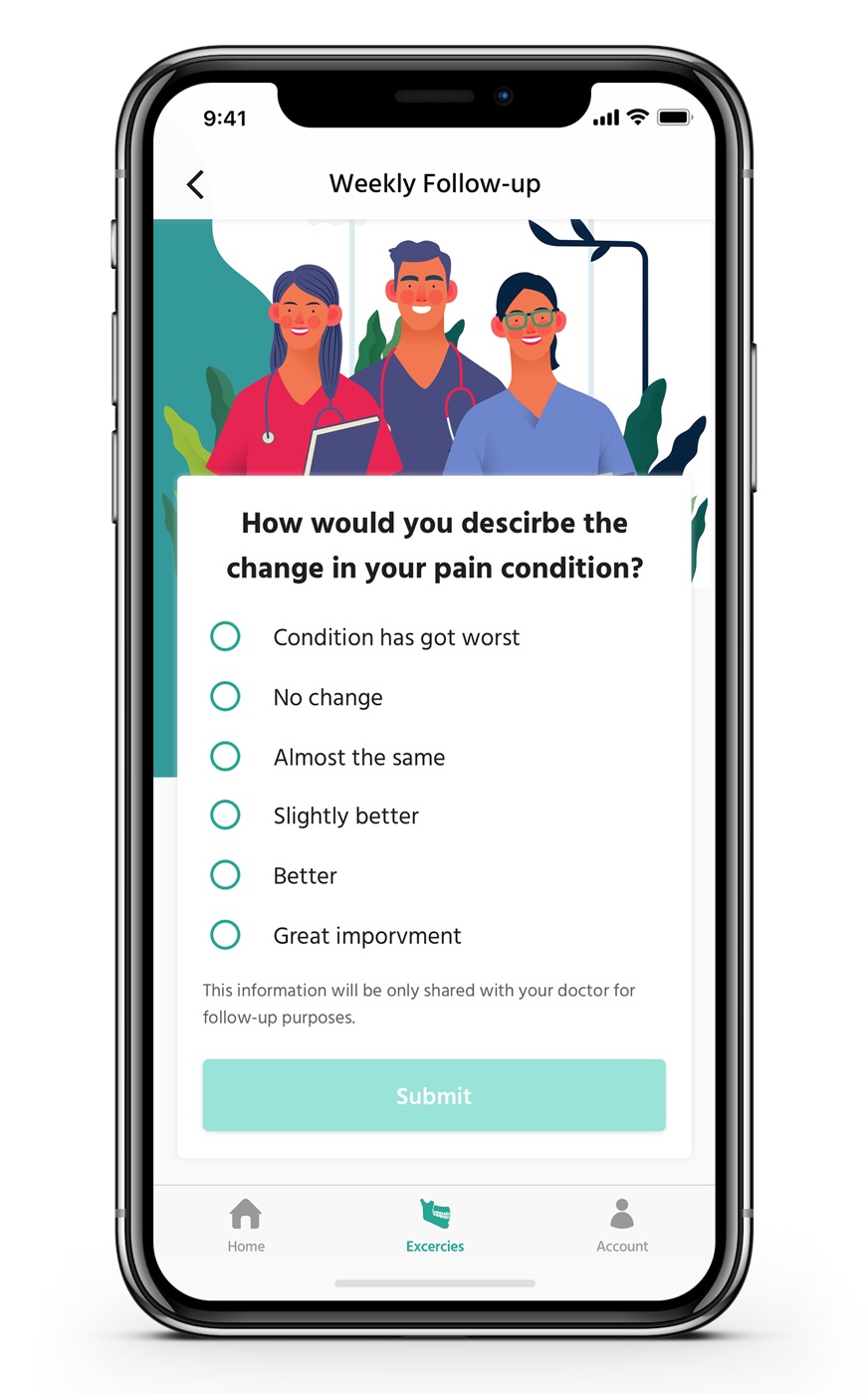
- UX & UI design — patient app (18-screen concept flow) and doctor/admin portals
- 3D exercise system direction — 17 exercises, front + side views, spoken guidance
- Delivery leadership — three documented review rounds from TestFlight to sign-off
Decisions & trade-offs
Three calls that shaped the platform
A two-sided ecosystem, not a patient app
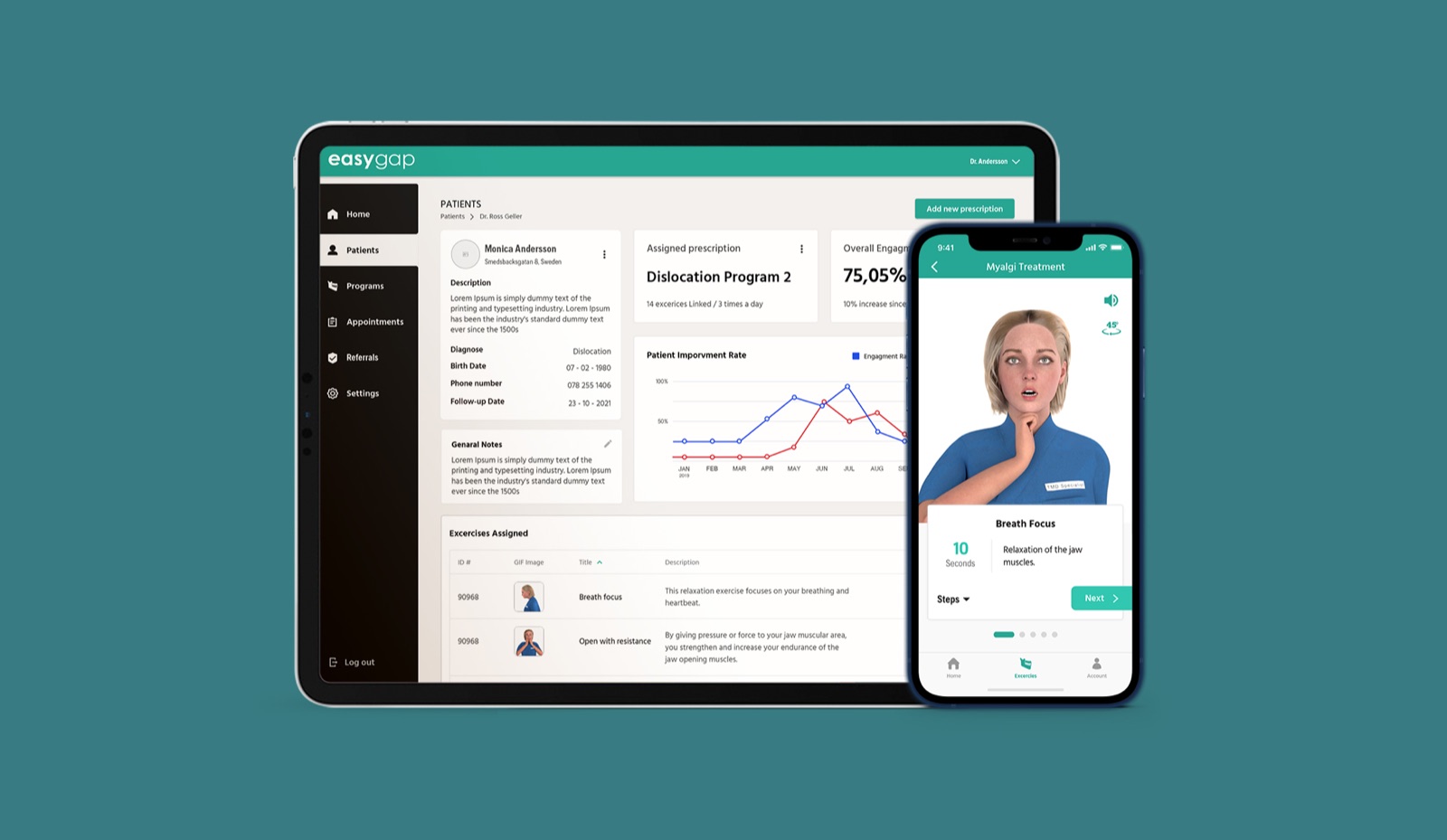
The prescription lives between two people. Patients get understanding, reminders and progress; doctors get per-patient tuning, records and engagement data — with patient onboarding gated by the doctor, so the app enters treatment through the clinic.
Trade-off — two products to design, one loop that works
A 3D coach instead of a paper sheet
Research said patients can't remember exact movements from paper. Every one of the 17 exercises became a 3D animation — front and side views, duration, repetitions and spoken step guidance in Swedish and English.
Trade-off — a bespoke animation pipeline, movements nobody misreads
Custom programs for specialists, standard for the rest
TMD specialists compose custom prescriptions; general dentists, physiotherapists and chiropractors prescribe specialist-approved standard programs — expertise flows down without diluting safety.
Trade-off — less flexibility at the edges, clinical trust everywhere
The platform
Three surfaces, one prescription
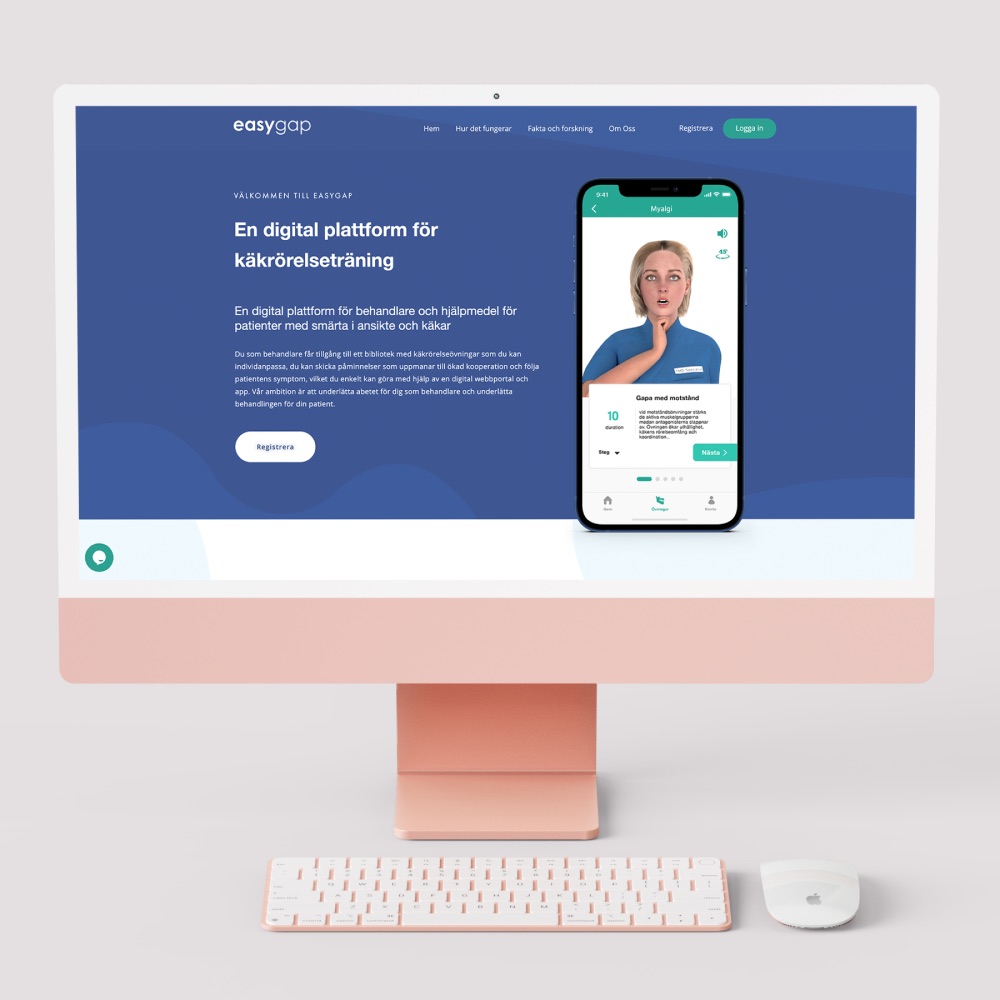
Easygap ships as three connected products: the public website where clinics learn the treatment and practitioners register; the prescription portal where dentists and specialists compose a program, tune it per patient and follow engagement between visits; and the patient app where the 3D coach turns that prescription into a daily routine.
Outcome
From clinical brief to paying product
The iOS app passed final review in March 2021; the doctor and admin portals hardened through spring 2021; and v1.5 shipped in May 2023 with payments, a specialist-approved program for individual patients, and encrypted QR clinic-connect. Built through documented review iterations — and with patients in the process from the first focus group on.
What I learned
Behavior change is designed between appointments
The clinic visit is minutes; the treatment is months of unsupervised mornings. Designing Easygap taught me that adherence is the product — understanding, reminders, visible progress and a coach that can't be misread matter more than any single screen. And that clinical collaboration works when designers treat the literature as a design input, not a formality.